Global Outlook for 2027
 -
-
By 2027, competitiveness in the global disposable medical supplies market will be defined by three key pillars: rigorous PPE standardization, end-to-end traceability, and stringent supplier qualification. For importers, wholesalers, and distributors serving the food packaging and healthcare sectors, these priorities directly impact procurement confidence, compliance, and customer trust.
Medical regulatory bodies and industry organizations have reached a consensus on a unified framework—ranging from the NIOSH respirator performance standards (42 CFR Part 84) to recognized device quality systems. Meanwhile, experts emphasize the importance of decision-making tools to ensure technical choices are made with confidence, as highlighted by Gartner. The following analysis focuses on the trends mentioned in the title and their specific implications for 2027.
Core Trends
PPE Standardization
Definition & Status: Standardization ensures that disposable PPE (e.g., gloves, masks, sleeves, shoe covers) delivers consistent safety and performance across different regions and use cases. Medical masks are typically evaluated using tiered performance standards (e.g., ASTM), respirators follow NIOSH 42 CFR Part 84, and manufacturers adhere to structured quality systems such as ISO 13485.
Drivers: Infection prevention and control priorities (WHO IPC), procurement harmonization, regulatory recognition of consensus standards, and cross-industry demand for reliable barrier protection in healthcare, food processing, and industrial hygiene.
Data Support: Respirator performance benchmarks are codified in federal regulations (42 CFR Part 84). Mask performance is often categorized into three levels under the ASTM framework, enhancing comparability for buyers; ISO 13485 provides a globally recognized quality standard (ISO 13485).
Impact on Value Chain: Suppliers align materials and processes with tiered performance expectations; distributors gain clearer specifications; end-users benefit from consistent protection and simplified cross-market comparisons.
Traceability (UDI and Data Standards)
Definition & Status: Traceability utilizes Unique Device Identification (UDI), standardized barcodes, and master data to link product identity, production history, and distribution paths. In the U.S., UDI is established through the FDA system and GUDID database. In the EU, UDI is a core requirement under the EU Medical Device Regulation (EU MDR) framework, with guidelines published by the European Commission.
Drivers: Regulatory mandates (FDA UDI, EU MDR UDI), recall effectiveness, supply chain visibility, and the widespread adoption of GS1 Healthcare standards (e.g., GTIN, 1D/2D barcodes) in healthcare and food packaging logistics.
Data Support: FDA UDI compliance was phased in by device class, with milestones in 2014 (Class III), 2016 (Class II), and 2020 (Class I/Unclassified) (FDA UDI Overview). EU MDR UDI requirements began with the MDR effective date in 2021, with staged carrier deadlines based on device category per Commission guidance.
Impact on Value Chain: Manufacturers must maintain accurate device master data; importers and distributors rely on standard identifiers to speed up receiving, reduce errors, and streamline regulatory filings and recall coordination.
Supplier Qualification
Definition & Status: Qualification aligns suppliers with documented quality, social responsibility, and product safety standards, typically including ISO 13485, BRCGS Packaging Materials, amfori BSCI, and region-specific device licenses.
Drivers: Regulatory scrutiny (EU MDR, US FDA), retailer audits, multi-market distribution, and the growing demand for sustainable materials with certifications such as BPI, DIN CERTCO, and Seedling.
Data Support: EU MDR requirements are legally binding under Regulation (EU) 2017/745, while BRCGS Packaging Materials is recognized by global retailers and specifically built for packaging safety management (BRCGS).
Impact on Value Chain: Importers gain audit-ready documentation and predictable quality; manufacturers reduce non-conformities; buyers shorten qualification cycles by using pre-validated suppliers.
Data-Driven Future Outlook (2027)
 -
-
By 2027, the universal adoption of UDI and GS1 data standards will be the default expectation globally. Procurement teams will increasingly favor specifications based on ASTM/NIOSH/ISO, combined with packaging safety systems (e.g., BRCGS). Cross-sector procurement is expected to become more frequent, with food packaging distributors expanding their medical consumable portfolios based on unified compliance specs.
Procurement teams should expect GS1 Global Trade Item Numbers (GTIN), 2D barcodes (e.g., DataMatrix) on device labels, and unified quality documentation (e.g., ISO 13485 certification, BRCGS packaging audits) to be more widely accepted. Buyer preference for suppliers with traceable, cross-market credentials will drive the proliferation of these standards.
| Category | Typical Framework | Primary Reference |
|---|---|---|
| Respiratory Protection | NIOSH Performance | 42 CFR Part 84 |
| Medical Masks | Tiered Performance | ASTM F2100 |
| Device Quality Systems | ISO 13485 | ISO 13485 |
| Packaging Safety | BRCGS Packaging Materials | BRCGS |
| UDI and Barcoding | FDA UDI, EU MDR UDI, GS1 | FDA | EU | GS1 |
Uncertainties remain in predictions regarding regional timelines and labeling details. However, the direction is clear: buyers will prefer suppliers with verifiable performance ratings, machine-readable identification, and third-party audits recognized across healthcare and food-related packaging chains.
Opportunities & Challenges
Opportunities: Consolidate multi-market procurement under unified standards; accelerate receiving via UDI/GS1; reduce recall costs; differentiate through sustainable, certified materials (BPI, DIN CERTCO, Seedling) in disposables and packaging.
Challenges: Label upgrades for carrier readability; maintaining accurate device master data across markets; aligning audits (ISO 13485, BRCGS) with evolving MDR guidelines; managing resin price volatility and lead times for film products.
Practical Action Guide
For Strategic Decision Makers (e.g., CEOs):
- Commit to device lines meeting ISO 13485 and packaging meeting BRCGS standards to solidify cross-market certification.
- Adopt GS1 GTIN and 2D barcodes across all SKUs; comply with FDA UDI and EU MDR UDI labeling requirements.
- Invest in automated processing for PE/POE film PPE and on-line data capture to strengthen traceability.
- Integrate sustainability into product design by adopting BPI/DIN CERTCO/Seedling certified compostable materials.
For Tactical Managers (e.g., QA, Supply Chain):
- Update specifications to reference tiered PPE performance frameworks and regulator-recognized standards.
- Map device identifiers to GUDID/GS1 data; verify barcode readability upon receipt.
- Prepare audit packages: ISO 13485 certificates, BRCGS reports, device licenses, and change control records.
- Run supplier scorecards combining defect rates, audit findings, and on-time delivery by SKU level.
For General Audiences (Buyers and Distributors):
- Use a compliance checklist: Performance levels, UDI/GS1 labeling, quality certificates, and packaging safety standards.
- Prioritize suppliers offering multi-market documentation and sustainable materials with recognized labels.
Path to Value Realization
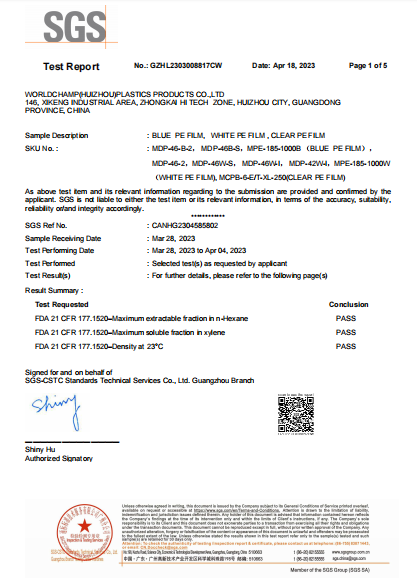
Worldchamp Enterprise (Huizhou) Co., Ltd. provides disposable film PPE (PE gloves, sleeves, shoe covers, aprons) and biodegradable packaging bags for the medical and food packaging industries. The company holds ISO9001, BRC, and BSCI certifications, along with a Class I medical device license. Its compostable production lines are certified by DIN CERTCO, Seedling, and BPI; with a monthly capacity of approximately 350 tons, it serves markets across the U.S., Europe, Asia, the Middle East, Norway, and Japan. For more information, visit hzworldchamp.cc.
To tailor these trends to your portfolio, book an expert consultation or request a proposal aligned with 2027 compliance and market demands.
References
- Regulations & Standards: eCFR 42 CFR Part 84; FDA UDI; AccessGUDID; EU UDI; EU MDR (2017/745); ISO 13485; BRCGS Packaging
- Industry & Guidelines: WHO Infection Prevention and Control; GS1 Healthcare; Gartner; BPI Certification; DIN CERTCO; Seedling Label